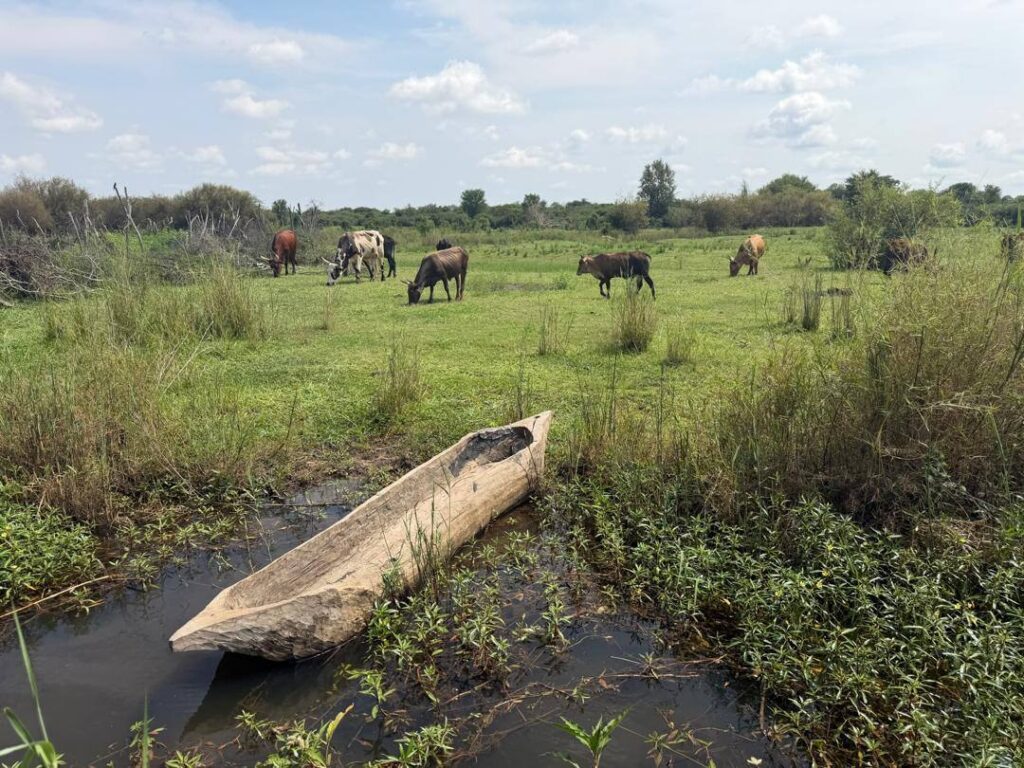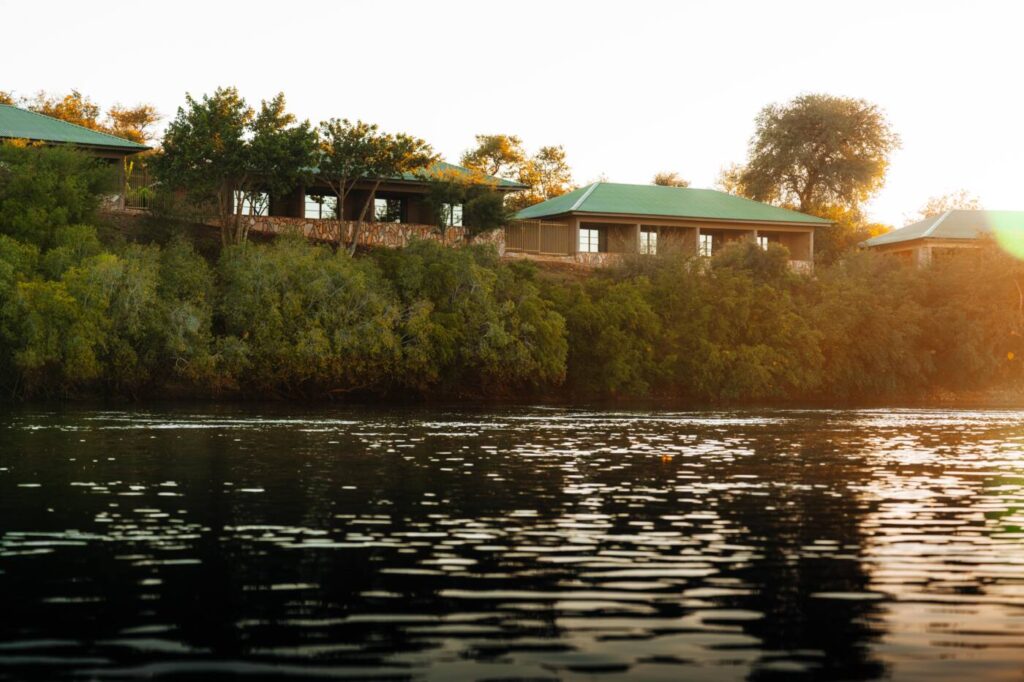
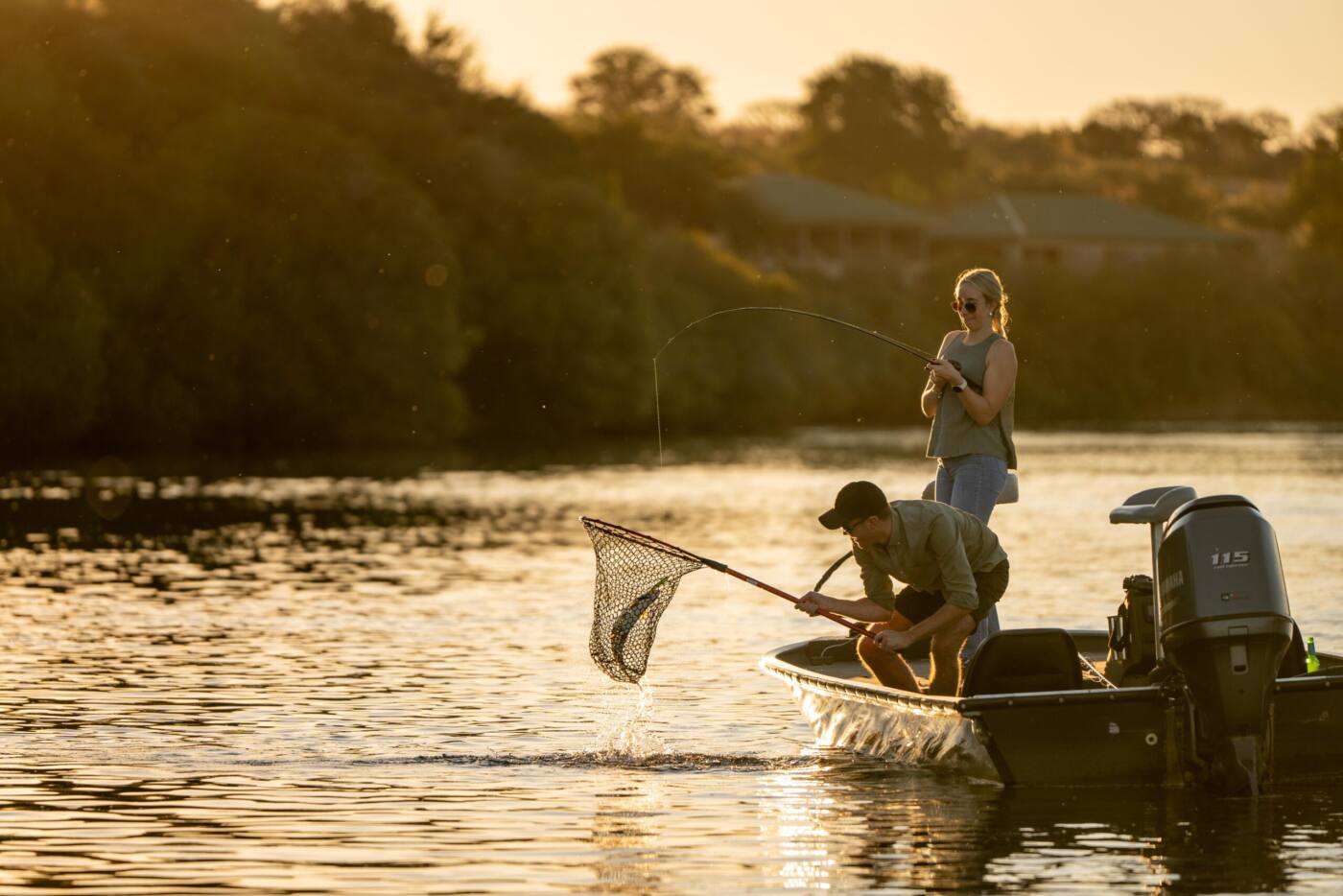
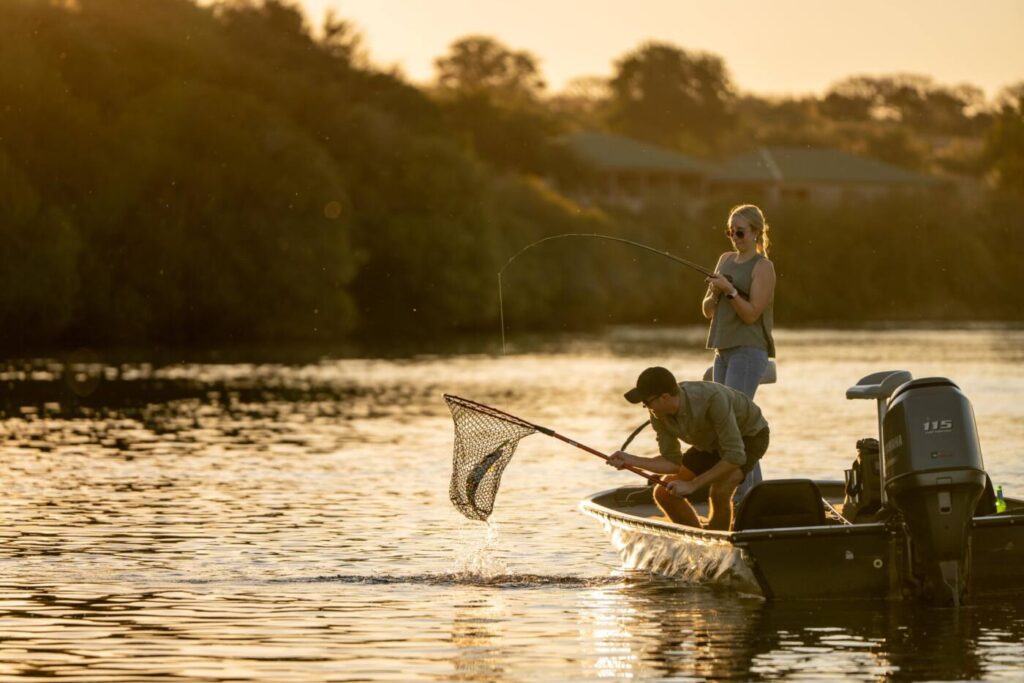
The tigerfish is Africa’s most famous freshwater game fish: fast, acrobatic and armed with a mouthful of dagger-like teeth. The Kavango River on Namibia’s northern border is one of the best places in the country to target it, and Simanya River Lodge sits right on its bank at Nkurenkuru.
This guide covers the basics for a tiger fishing trip on the Kavango: how the fish behaves, when to come, what tackle to pack, what else you might hook, the licence you need, and how to release a fish so it lives to fight another day.
- Target speciesTigerfish (Hydrocynus vittatus)
- Best monthsJune to December, as the water drops
- LicenceNamibian freshwater angling licence
- StyleGuided boat fishing, catch and release
Meet the tigerfish
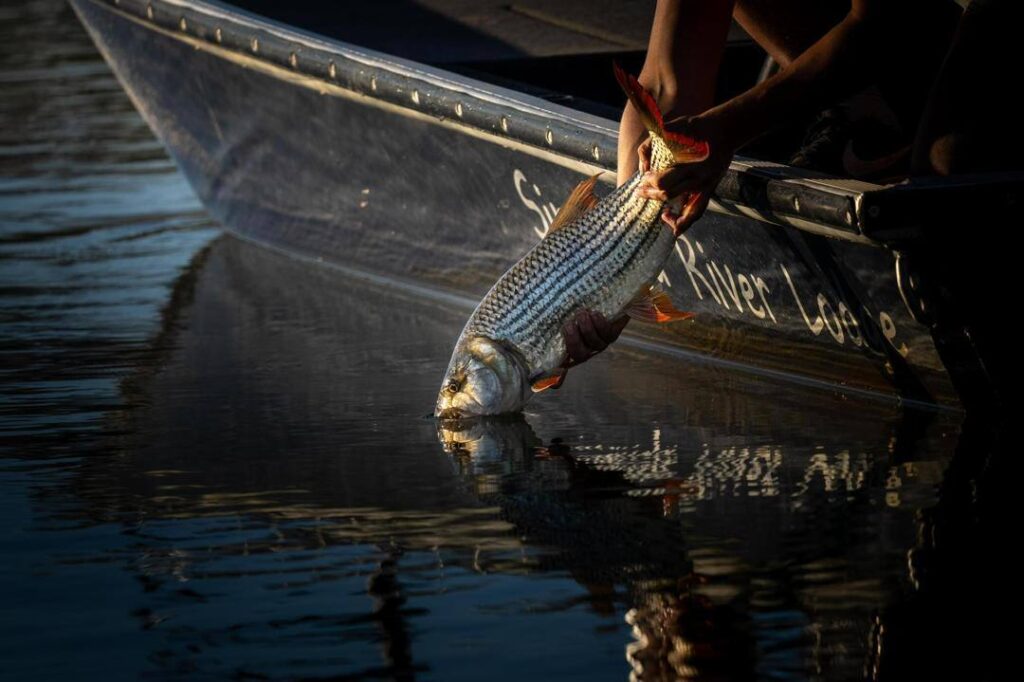
The African tigerfish, Hydrocynus vittatus, is a predatory fish found across much of sub-Saharan Africa. It is built for speed, with a silver, streamlined body marked by dark horizontal stripes and a bright, forked tail. Its most famous feature is its teeth: large, interlocking and dagger-shaped, and visible even when the mouth is closed.
According to the species profile on Seriously Fish, tigerfish can grow beyond a metre in length, and the heaviest fish caught in the wild weighed about 28 kg. Most fish caught on the Kavango are a great deal smaller than that, but even a modest tiger pulls far harder than its size suggests. Tigerfish prefer warm water of around 24 to 28 °C and often hunt in groups, which is why a good drift can produce several strikes in quick succession.
In Namibia the river is called the Kavango. Upstream in Angola it is the Cubango, and downstream in Botswana it becomes the Okavango, which ends in the famous inland delta. Simanya is on the stretch that forms the border between Namibia and Angola.
When to go tiger fishing on the Kavango
The Kavango’s level is driven by rain that falls far upstream in the Angolan highlands between October and March. A hydrology study of the Okavango Basin by Steudel and colleagues (2013) shows that flow past Rundu peaks in April and falls to its lowest point in October.
For anglers, the falling water is what matters. An overview of angling in north-eastern Namibia published by the Allgemeine Zeitung describes June to December as the most rewarding period, when the receding water concentrates baitfish and the predators that follow them. As the river warms again from September, tigerfish become increasingly active.
- June to August: clearing water and cool, crisp mornings. Fishing picks up through the day as the water warms.
- September to November: low, warm water and hot days. Many anglers consider this the peak of the season.
- December to May: the rains and the flood season. The river is high and coloured and fishing is less predictable, but the scenery is at its greenest.
A note on water levels at Simanya: in very dry years the river can drop too low for boats from about September to December. Check with the Simanya team before booking a fishing-focused stay in these months, and confirm boat availability when you arrive.
For a full picture of weather, water levels and birding through the year, see our guide to the best time to visit the Kavango River.
Photo to add: a guest holding a tigerfish on the boat, with the teeth clearly visible (landscape).
Tackle and techniques
Your guide will advise on what works on the day, and it is worth asking the lodge in advance what tackle is available. As a general guide, plan for the following.
- A wire trace. Tigerfish teeth will cut through ordinary monofilament or braid in an instant. A short steel or titanium trace between the line and the lure is essential.
- Strong, very sharp hooks. A tigerfish’s mouth is hard and bony, and many fish are lost on the first jump. Keep hooks sharp and set the hook firmly.
- Medium spinning tackle. A medium rod with a reel spooled with braid gives you the casting distance and control you need around reed beds and channels.
- Lures that flash. Spinners, spoons and diving plugs that imitate small baitfish are the classic choice. Fly anglers use baitfish patterns on a 7 or 8 weight rod with a wire bite tippet.
- Bait. Drifting with fish fillet is a reliable way to find fish, especially for beginners and children.
Work the edges where the current changes: the mouths of side channels, drop-offs, the ends of sandbanks and the seams along reed beds. Tigerfish often strike hard and then leap, so keep your rod tip up and the line tight.
What else you might catch
The Kavango is far more than a tigerfish river. The same angling overview notes that 79 fish species have been recorded in the Okavango system. Species anglers often encounter include:
- Sharptooth catfish (barbel), which can reach 1.4 m and more than 50 kg.
- Thinface and humpback largemouth, predatory cichlids that hit lures hard.
- Green bream and redbreast and greenhead tilapia, which are good targets on light tackle and fly.
Fishing licences and rules in Namibia
Anyone fishing in Namibia’s inland waters needs a freshwater angling licence under the Inland Fisheries Resources Act of 2003. Licences are managed by the Ministry of Fisheries and Marine Resources and are issued through regional offices, including the regional council office in Rundu. Rules on bag limits, protected areas and methods can change, so check the current regulations before your trip, and ask the Simanya team to help you arrange your licence when you book.
Catch and release, the right way
Tigerfish are a slow-growing, much-loved resource, and research has found evidence of overfishing of tigerfish in the Kavango River. Releasing your catch helps keep the fishery healthy. Fishing outfitter Aardvark McLeod recommends a few simple habits:
- Use barbless hooks, or flatten the barbs with pliers, so hooks come out quickly.
- Use tackle matched to the fish and play it quickly, so it is not exhausted.
- Keep the fish in the water as much as possible and keep air time to a few seconds for a photo.
- Handle the fish with wet hands, support its body, and never touch the gills.
- Keep the fish away from rocks and the boat floor.
- Hold it facing into the current until it swims away under its own power.
Watch the teeth when unhooking. Long-nosed pliers or forceps keep your fingers well clear.
Tiger fishing at Simanya River Lodge
Simanya offers guided tiger fishing excursions straight from the lodge, with river-facing rooms, Simanya Basecamp campsites with ice and supplies, and the Fancy Fisherman Pub for comparing stories at the end of the day. Read more about our activities, plan the drive with our Windhoek to Nkurenkuru road trip guide, or contact us to book a fishing stay.
Photo to add: the Simanya fishing boat with guide and guests heading out at sunrise (landscape).
Frequently asked questions
When is the best time for tiger fishing on the Kavango River?
June to December is generally the most rewarding period, as the river drops after the flood and the water warms. Many anglers consider September to November the peak, although very low water can limit boat access at Simanya in some years, so check with the lodge first.
Do I need a fishing licence to fish the Kavango River?
Yes. Anyone fishing in Namibia’s inland waters needs a freshwater angling licence from the Ministry of Fisheries and Marine Resources, issued through regional offices such as Rundu. Simanya can help you arrange one when you book.
What tackle do I need for tigerfish?
Use medium spinning tackle with braid, a short wire trace to stop the teeth cutting the line, strong and very sharp hooks, and lures such as spinners, spoons and baitfish plugs. Fly anglers use a 7 or 8 weight rod with a wire bite tippet.
Is tiger fishing at Simanya catch and release?
Simanya encourages catch and release to help protect the Kavango’s tigerfish. Use barbless hooks, keep the fish in the water and release it facing into the current.
What other fish live in the Kavango River?
Besides tigerfish, anglers catch sharptooth catfish (barbel), thinface and humpback largemouth, green bream and several tilapia species. Around 79 fish species have been recorded in the Okavango system.
Sources
- Hydrocynus vittatus species profile, Seriously Fish.
- Northeastern Namibia: an angler’s paradise, Allgemeine Zeitung, 22 June 2018.
- Okavango Basin: Hydrology, Steudel et al., Biodiversity & Ecology 5, 2013.
- Inland Fisheries Resources Act, 2003, NamibLII.
- Angling, Ministry of Fisheries and Marine Resources, Namibia.
- Evidence for overfishing of tigerfish Hydrocynus vittatus in the Kavango River, Namibia, NINA Brage repository.
- Handling fish: good practice, Aardvark McLeod.