Tigerfish get the headlines, but the Kavango River holds far more. Powerful barbel, hard-hitting largemouth, colourful bream and even a pike all live in the same water, which means there is something to catch in almost every season and on almost any tackle.
This guide introduces the main species beyond tigerfish, where to find them and how to catch them.
- Species recorded79 in the Okavango system
- BiggestSharptooth catfish, up to 1.4 m
- Best on light tackleLargemouth and bream
- LicenceRequired for all inland waters
Sharptooth catfish (barbel)
The sharptooth catfish, Clarias gariepinus, known to anglers as barbel, is the giant of the river. The Allgemeine Zeitung’s angling overview describes barbel of up to 1.4 m and 54 kg in north-eastern Namibia, calling them aggressive, powerful fish with tremendous fighting spirit.
According to Wikipedia, barbel are mainly active at night and will eat almost anything, from insects and snails to fish and even birds. They have special breathing organs that let them gulp air, so they can survive in shallow, oxygen-poor water.
- Where: deeper, slower water, backwaters and the edges of channels.
- When: dusk and after dark are best.
- How: strong tackle and fish fillet or other smelly baits fished on the bottom. Big barbel are strong, so use line and hooks that can handle a heavy fish.
Photo to add: a guest with a large barbel caught on the Kavango (landscape).
Largemouth (Serranochromis)
The largemouths are predatory cichlids, and many anglers rate them as the best sport on light tackle after tigerfish. The Namibia Nature Foundation’s guide to freshwater fishes lists several species in the Kavango system:
- Thinface largemouth (Serranochromis angusticeps), up to about 40 cm.
- Humpback largemouth (Serranochromis altus), up to about 40 cm.
- Purpleface largemouth (Serranochromis macrocephalus), up to about 56 cm.
- Nembwe (Serranochromis jallae), a prized, heavily built predator.
Look for largemouth around reed beds, lily pads and drop-offs, where they ambush small fish. Small spinners, soft plastics, shallow-diving plugs and baitfish flies all work. Strikes are sudden and hard, so stay alert.
Photo to add: a thinface or humpback largemouth caught at Simanya (landscape).
Bream and tilapia
Anglers in southern Africa usually call the tilapia species “bream”. They are fun to catch on light tackle, great for beginners and children, and an important food fish for families along the river. Species in the Kavango, according to the Namibia Nature Foundation, include:
- Threespot tilapia (Oreochromis andersonii), up to about 50 cm.
- Greenhead tilapia (Oreochromis macrochir), up to about 43 cm.
- Redbreast tilapia (Coptodon rendalli), up to about 29 cm.
Use light line, small hooks and simple baits such as earthworms or dough, fished near the bottom in quieter water and along vegetation. A float rig is an easy way for children to start. See our family holiday guide for more ideas for young anglers.
African pike and other species
The southern African pike (Hepsetus cuvieri), which reaches about 47 cm, is a sharp-toothed ambush predator of quiet, vegetated water, and a rewarding catch on small lures or flies. The river is also home to the spotted squeaker (Synodontis nigromaculatus), a small catfish that grunts when lifted from the water, and many other species. In all, 79 fish species have been recorded in the Okavango system.
Seasons and water levels
The Kavango rises with the Angolan rains, usually peaking in April, and drops to its lowest around October. As the water falls from June, fish concentrate in the channels, and the angling overview describes June to December as the most rewarding period. Keep in mind that at Simanya, very low water from about September to December can limit boat access, so check with the team before you book a fishing-focused stay. Our month-by-month guide has the details.
Licences and good practice
Anyone fishing in Namibia’s inland waters needs a freshwater angling licence under the Inland Fisheries Resources Act. The Ministry of Fisheries and Marine Resources manages licences, which are available from regional council offices in Rundu and Katima Mulilo. Release what you do not need, give way to local fishermen and their nets, and never leave line or hooks on the bank.
Fishing at Simanya River Lodge
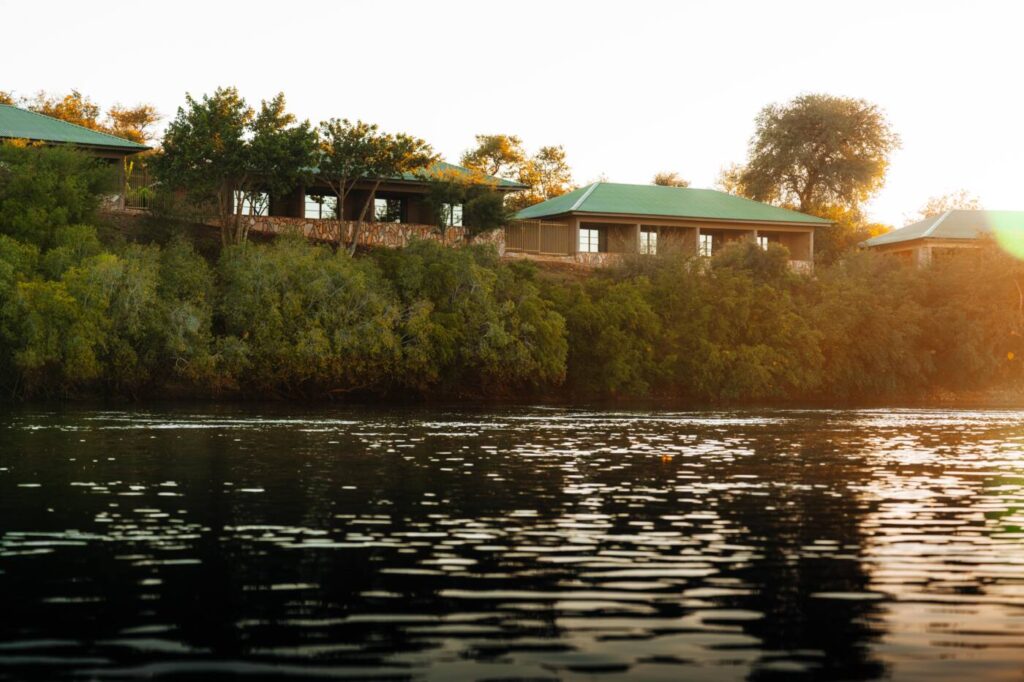
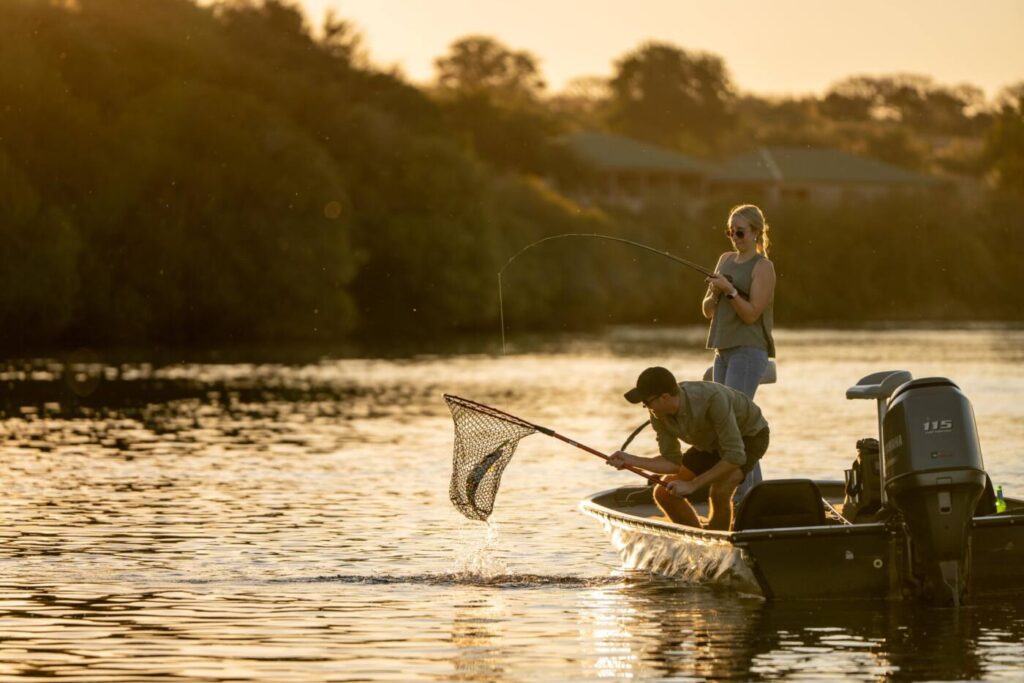
Simanya offers guided fishing trips straight from the lodge. Whether you want to chase tigerfish, set a bait for barbel or introduce the children to bream, the guides know where to go. Read our tiger fishing guide, see our activities or contact us to book.
Frequently asked questions
What fish can you catch in the Kavango River besides tigerfish?
Popular species include sharptooth catfish (barbel), thinface, humpback and purpleface largemouth, nembwe, threespot, greenhead and redbreast tilapia (bream), and southern African pike.
How big do barbel get in the Kavango River?
Sharptooth catfish in north-eastern Namibia can reach about 1.4 m and more than 50 kg, so strong tackle is essential.
What is the best bait for bream?
Earthworms and simple dough baits on small hooks and light line work well, fished near the bottom in quieter water and along vegetation.
Do I need a licence to fish for bream and barbel?
Yes. A freshwater angling licence is required for all fishing in Namibia’s inland waters, whatever the species.
Sources
- Northeastern Namibia: an angler’s paradise, Allgemeine Zeitung, 22 June 2018.
- Freshwater fishes of Namibia, Namibia Nature Foundation.
- Clarias gariepinus, Wikipedia.
- Okavango Basin: Hydrology, Steudel et al., Biodiversity & Ecology 5, 2013.
- Inland Fisheries Resources Act, 2003, NamibLII.
- Angling, Ministry of Fisheries and Marine Resources, Namibia.